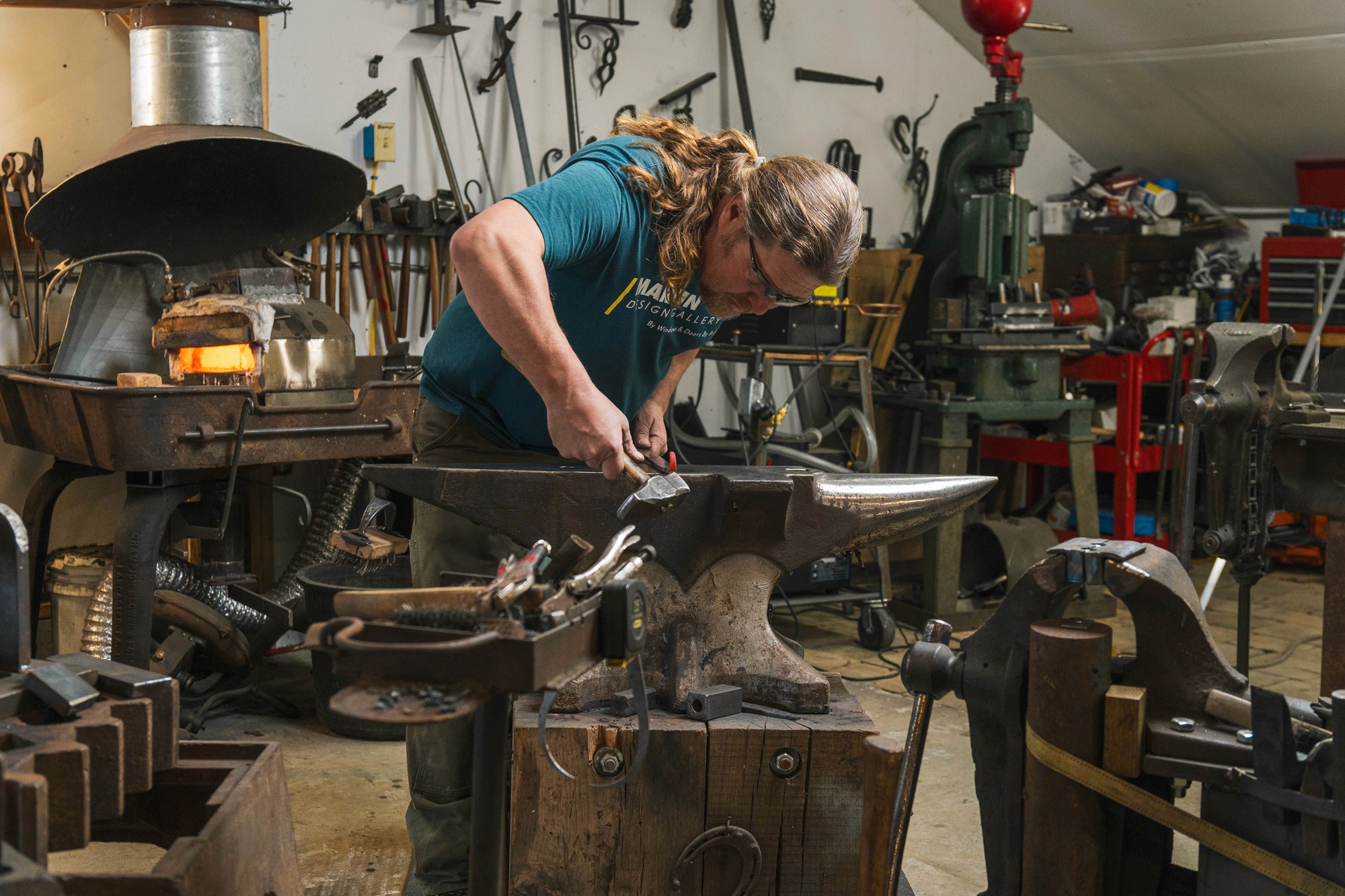
Metalsmith Judson Yaggy forging a curl onto a hasp at the anvil
Meet Judson, our metalsmith who has been forging and fabricating for over 30 years. We sat down with Jud to hear his story—from his foray into metal to his most rewarding Birdseye projects to his passion for preserving the craft.
What’s your role at Birdseye?
I do all of our metalwork, but I also do some timber framing and safety management. It depends what each project needs, but I’m happiest working with metal.
When did you first start working with metal?
I took a jewelry making class when I was in high school. I learned the basics, like soldering and polishing. Around that same time, I met a blacksmith who was hand-forging historical reenactment pieces like flint locks, camping fireplaces, and cooking sets. I started learning blacksmithing from him. As a graduation gift, my parents gave me a forge and anvil. I’d work in the little shed behind our house, banging out crummy-looking knives and hooks and things of that nature.
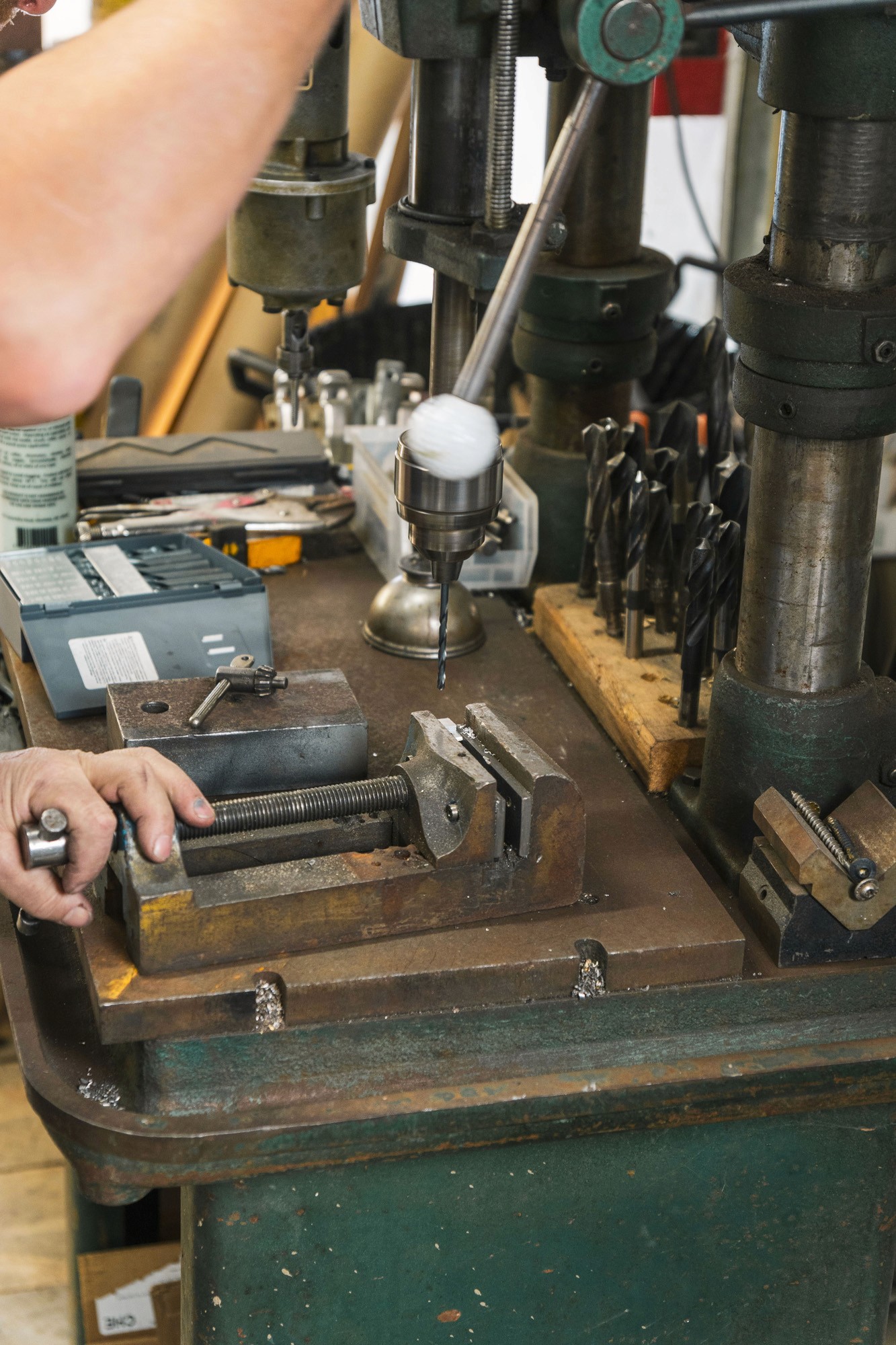
Drilling a hole for a rivet
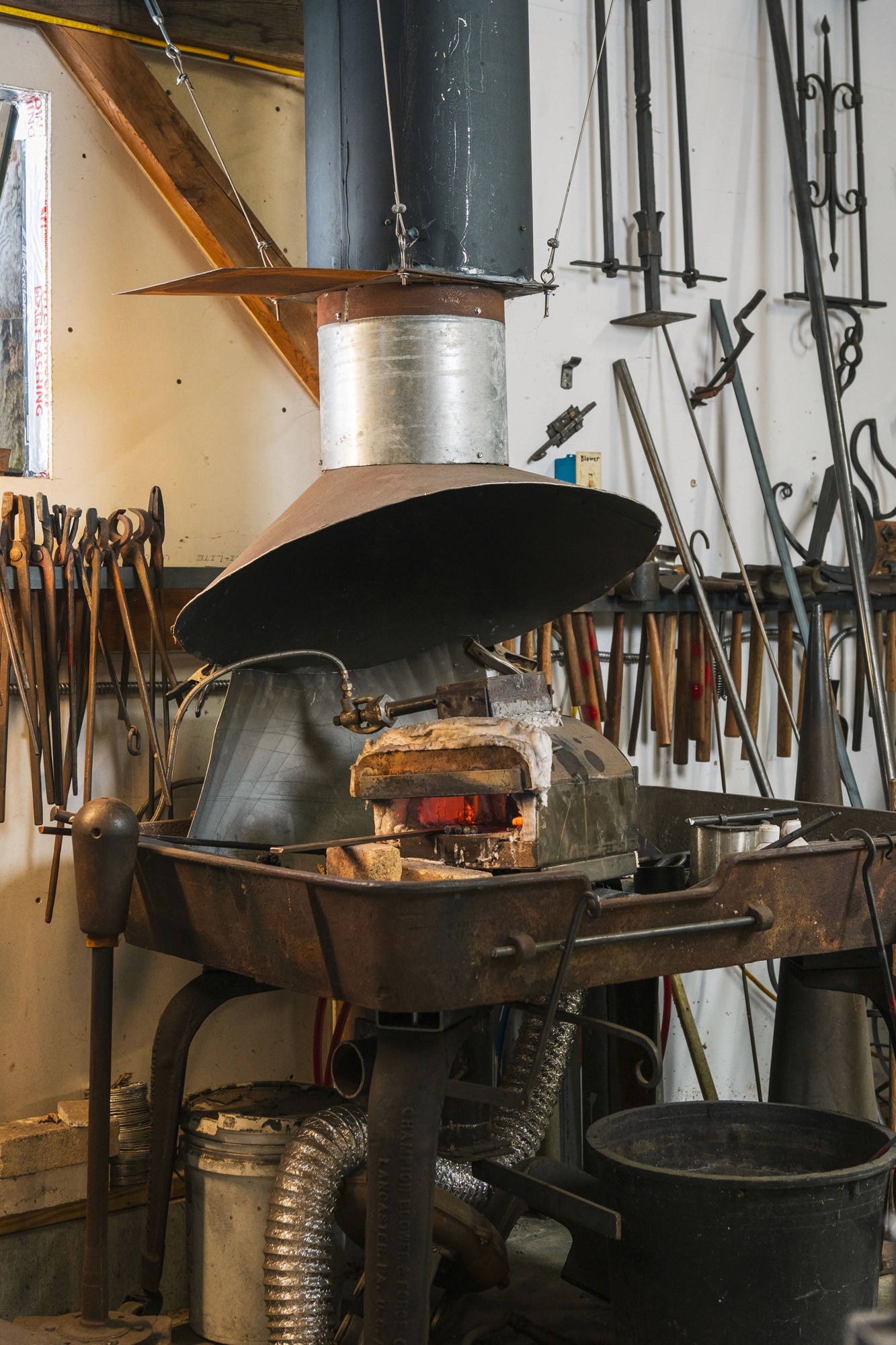
A propane forge sitting on top of a coal forge
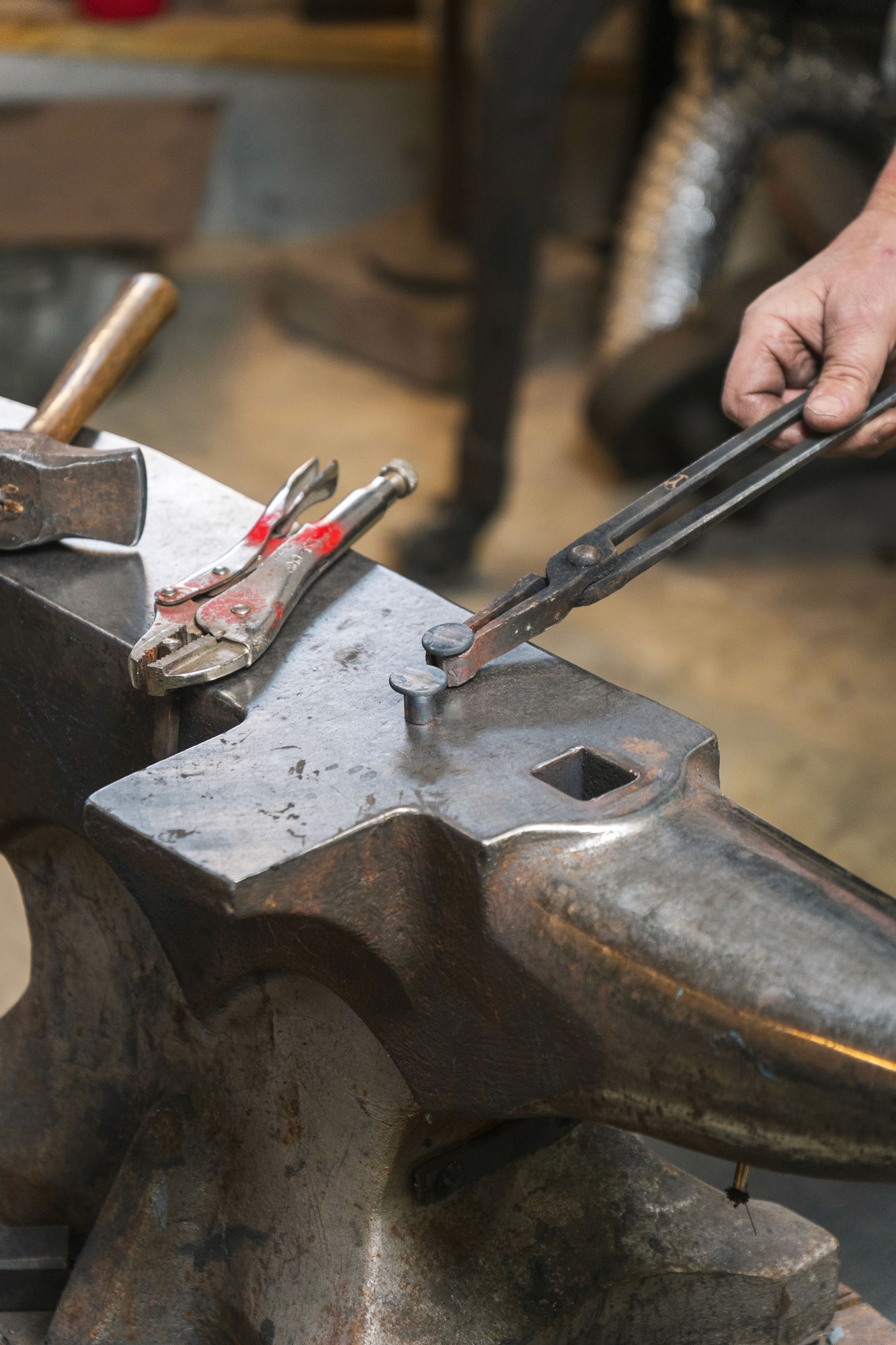
Freshly forged button pulls
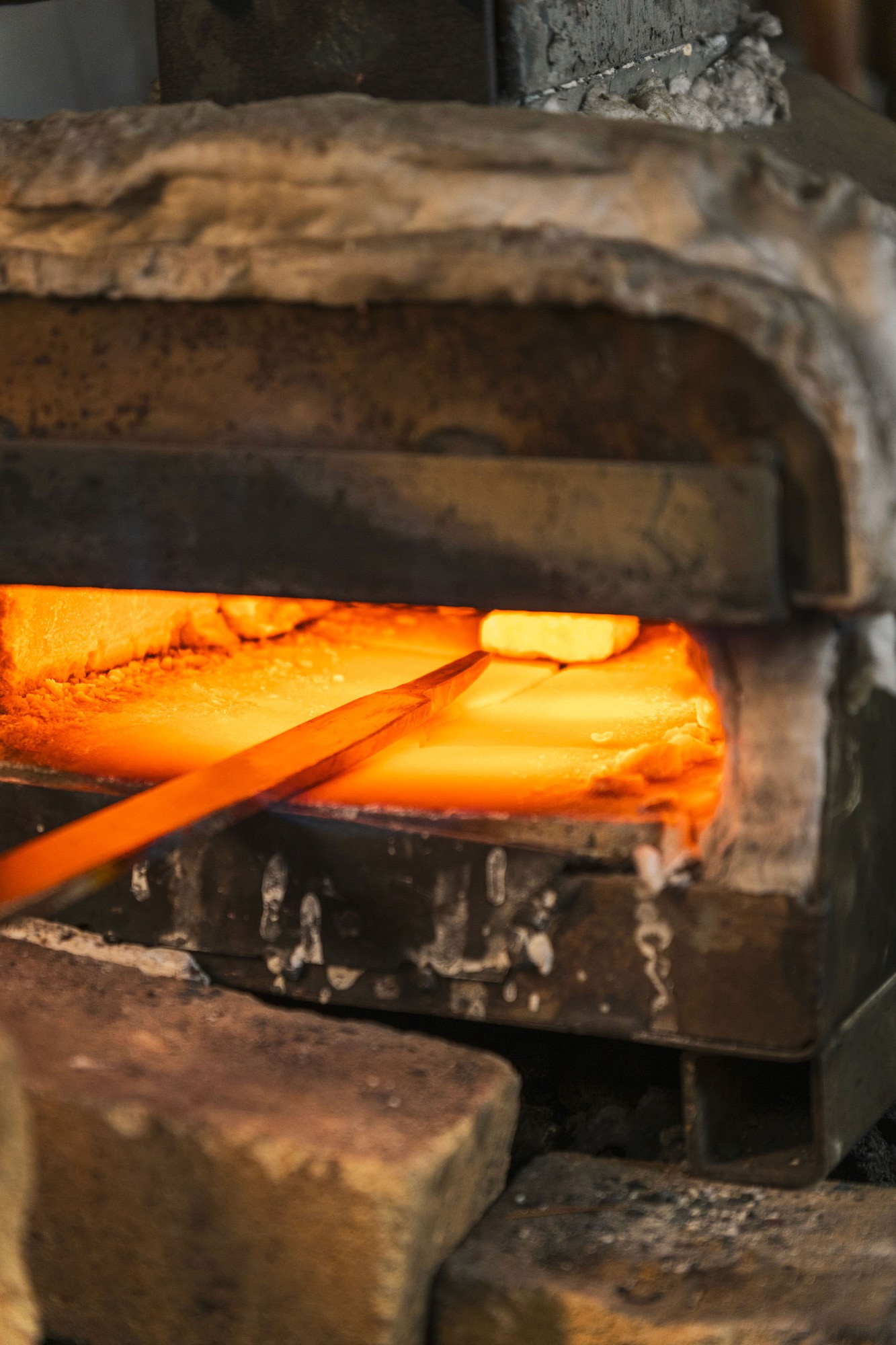
Reheating a workpiece to 1,800 degrees
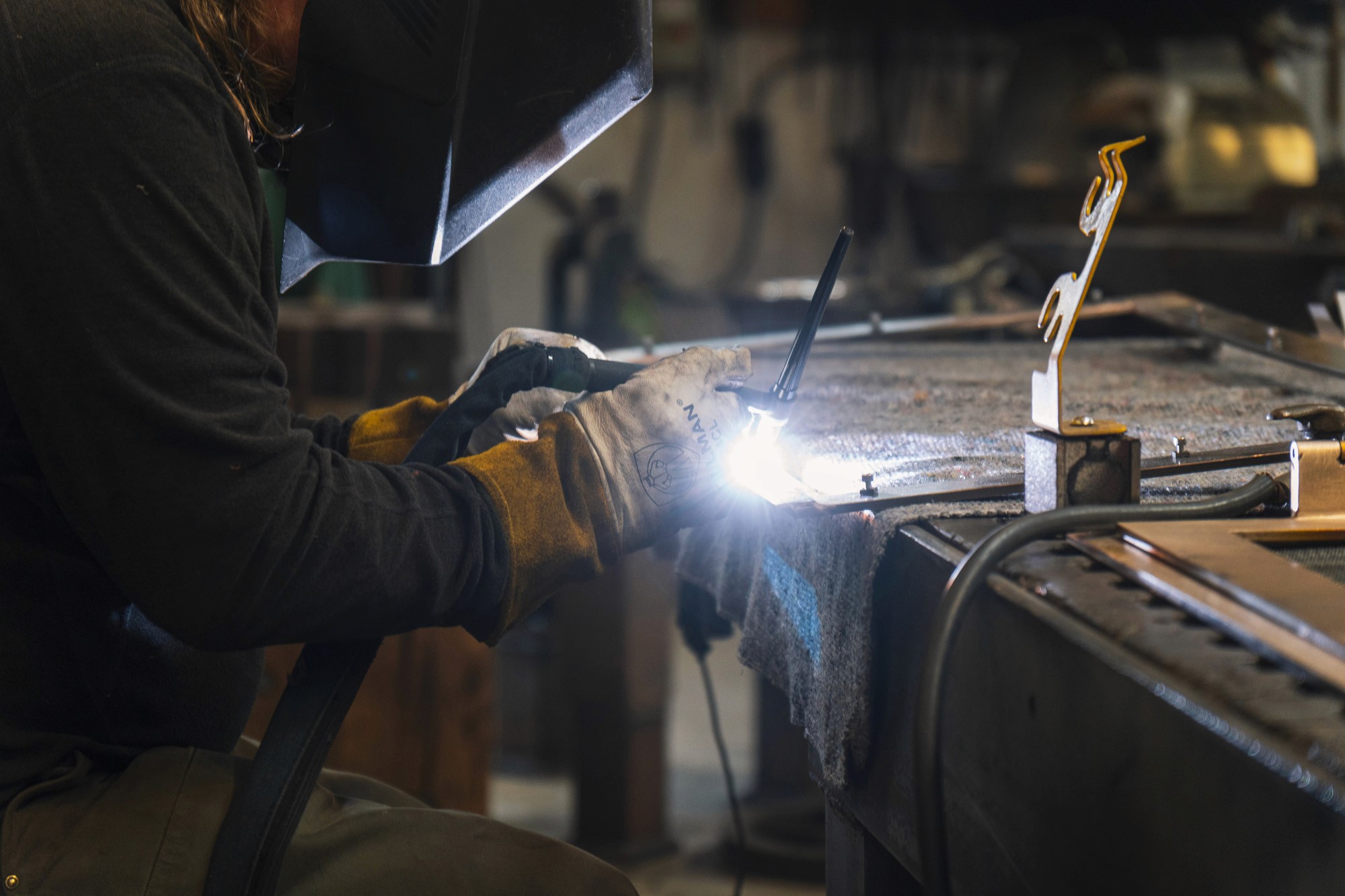
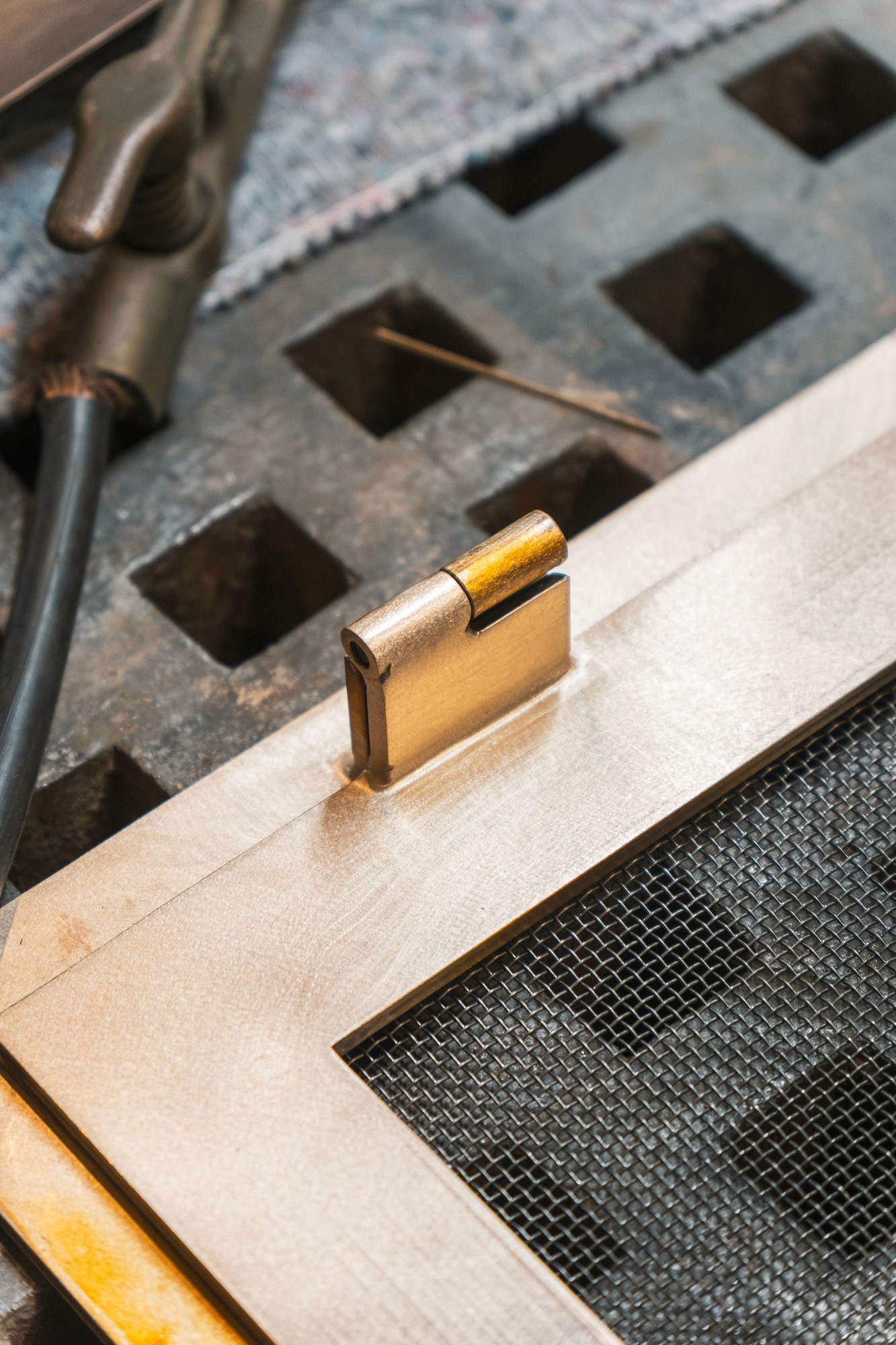
Tig welding a door frame
When did metalworking shift from an interest into a career?
I went on to study industrial design in college, but the program was more focused on running machine tools and programming robots than on artistic design. One winter break, I walked into an architectural blacksmith shop in Stowe. The owner was slammed with work that day. Even though I was completely green, I told him I was a blacksmith too. He asked, “What are you doing on Monday?” He hired me on the spot, and I worked with him all throughout college. After I graduated, I decided I didn't enjoy cubicle jobs, so I went to a timber framing outfit down the road and found work there instead. Over the next decade, I had one foot in timber framing and the other in blacksmithing, staying busy with work wherever I could find it.
How long have you been working with Birdseye?
I’ve been with Birdseye for almost 20 years. I could do this work with another company or for myself, but Birdseye gives me the opportunity of a unique, challenging process with every project. Everything we make is custom. There's no manual or textbook for what we do. Making the piece itself and my love for the material are at the core, but the puzzles, the problem solving, and the team culture are what have kept it interesting for all these years.
Tell us about one of the most challenging or rewarding pieces you've crafted.
In 2019, we did a project in central Vermont called Hand Hewn. The clients had purchased an early-18th-century, Dutch-style timber frame. Every piece was cut to fit a specific spot in the home. No parts were interchangeable. All of the wooden peg joinery was custom-made for each joint throughout the entire structure. The frame was delivered to us in deconstructed pieces with a hand-drawn sketch of the original barn structure. We had to go through everything, figure out how to put the whole thing back together, and fix the rotted and broken pieces along that way. The team spent nine months understanding how to reconstruct it. I got to cut a new timber frame to add a garage onto the structure, and our clients asked for metalwork absolutely everywhere. Railings, hoods, cabinet hardware, you name it. They asked for miles and miles of ironwork. I was a part of the project from the moment the tractor trailer pulled into the driveway on the first day all the way to the final touch of placing the last doorknob. It’s one of the highlights of my career.
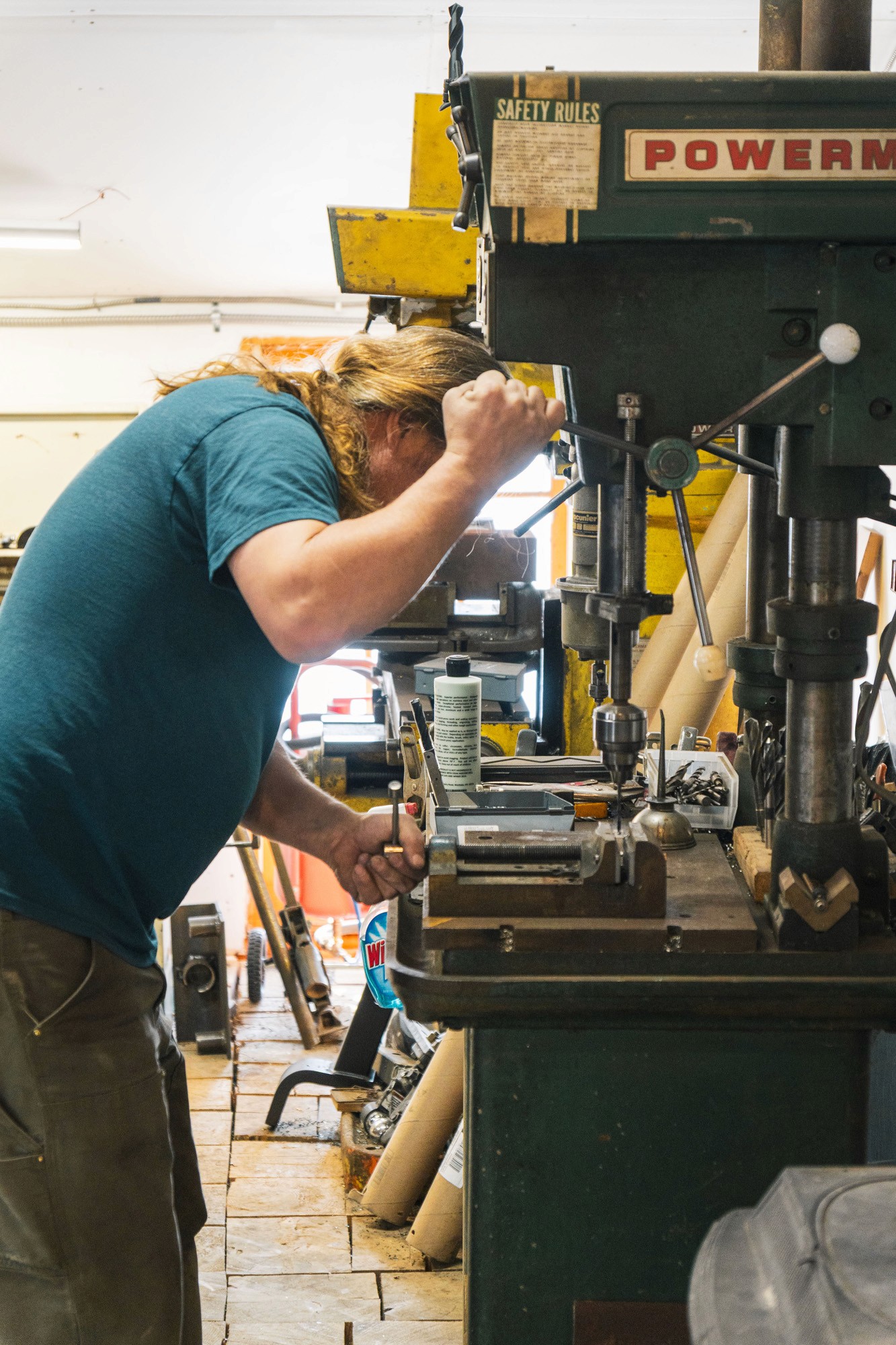
Jud in the shop, milling and drilling
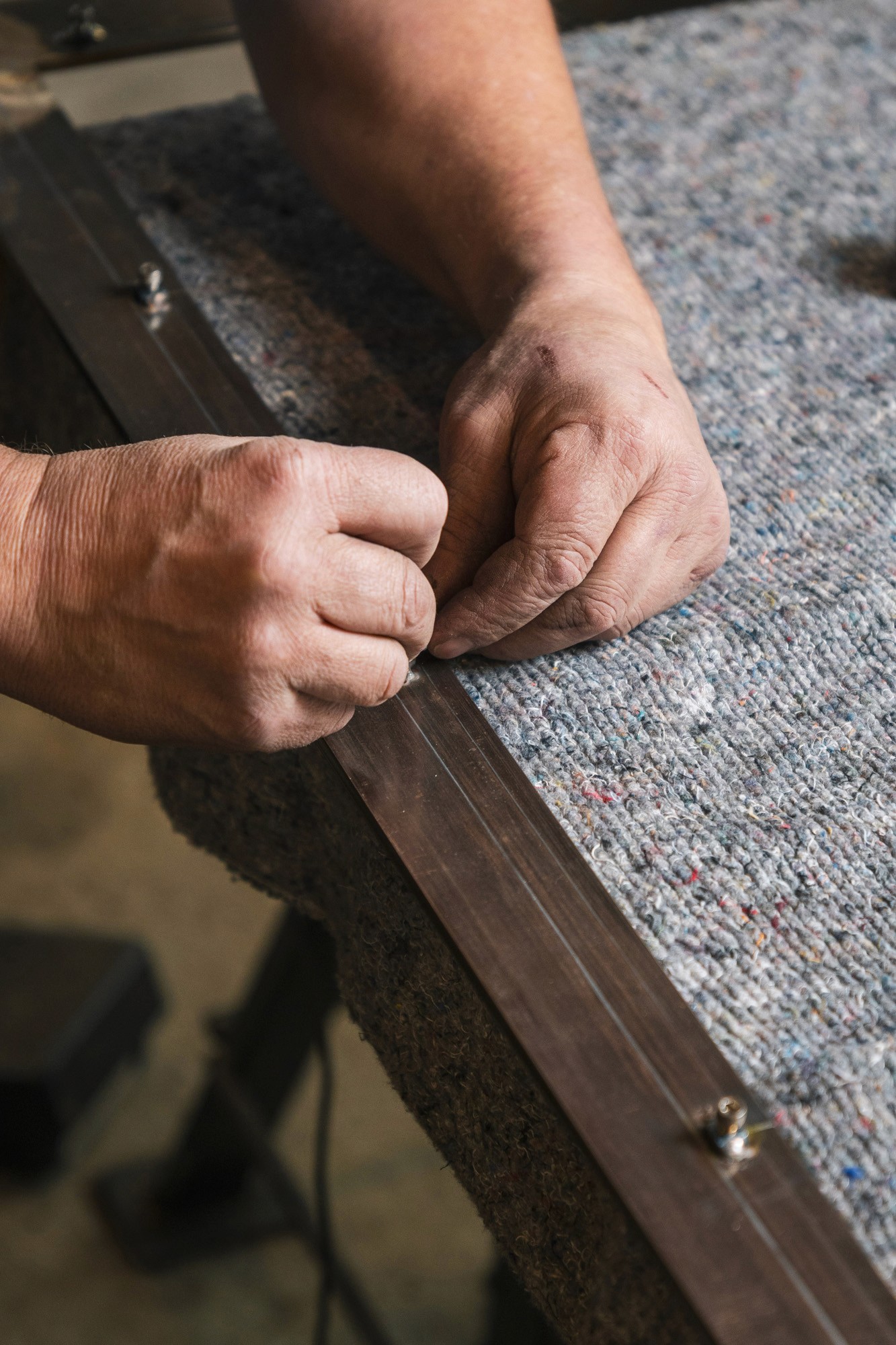
Hand-fitting small parts
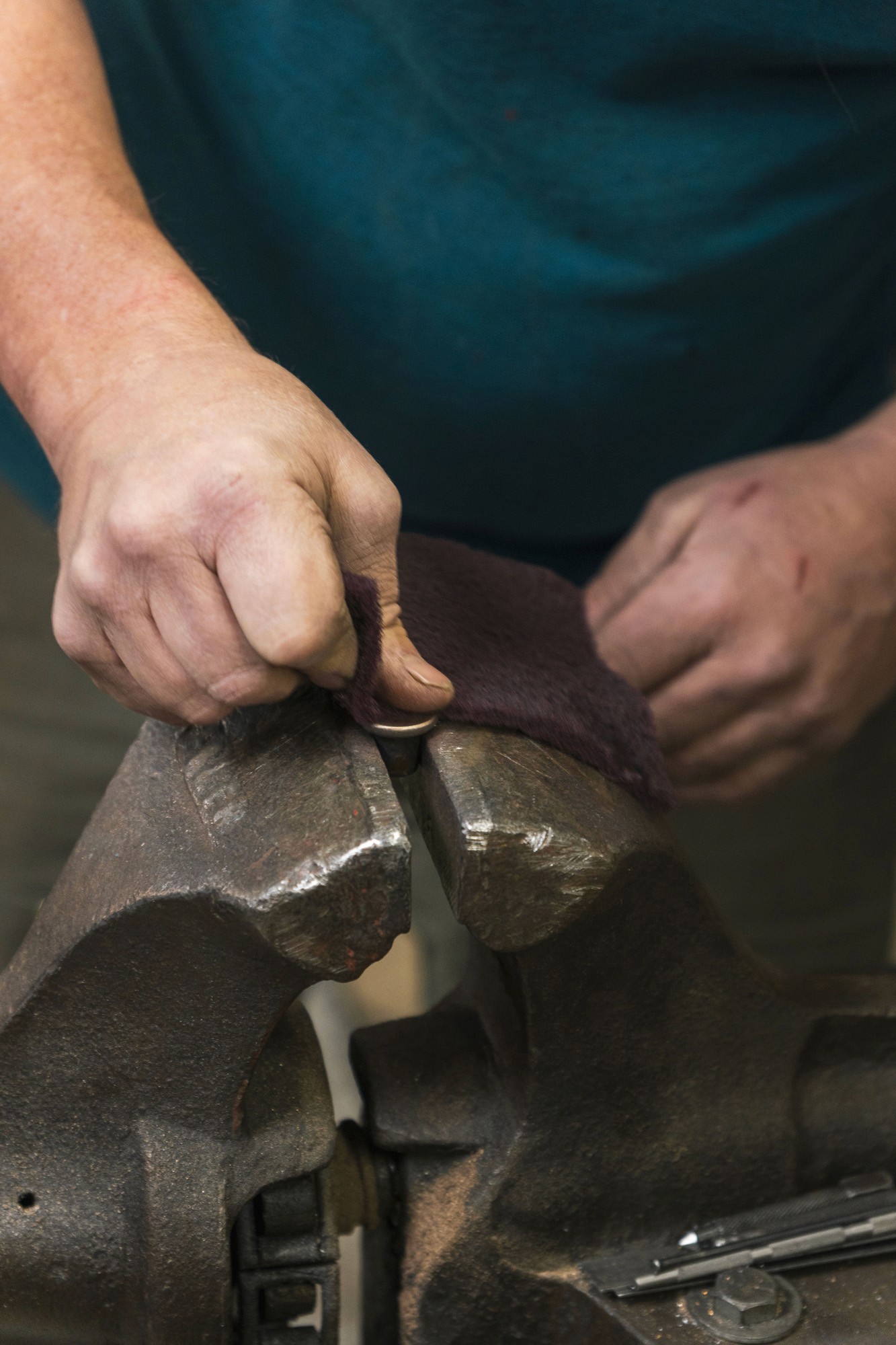
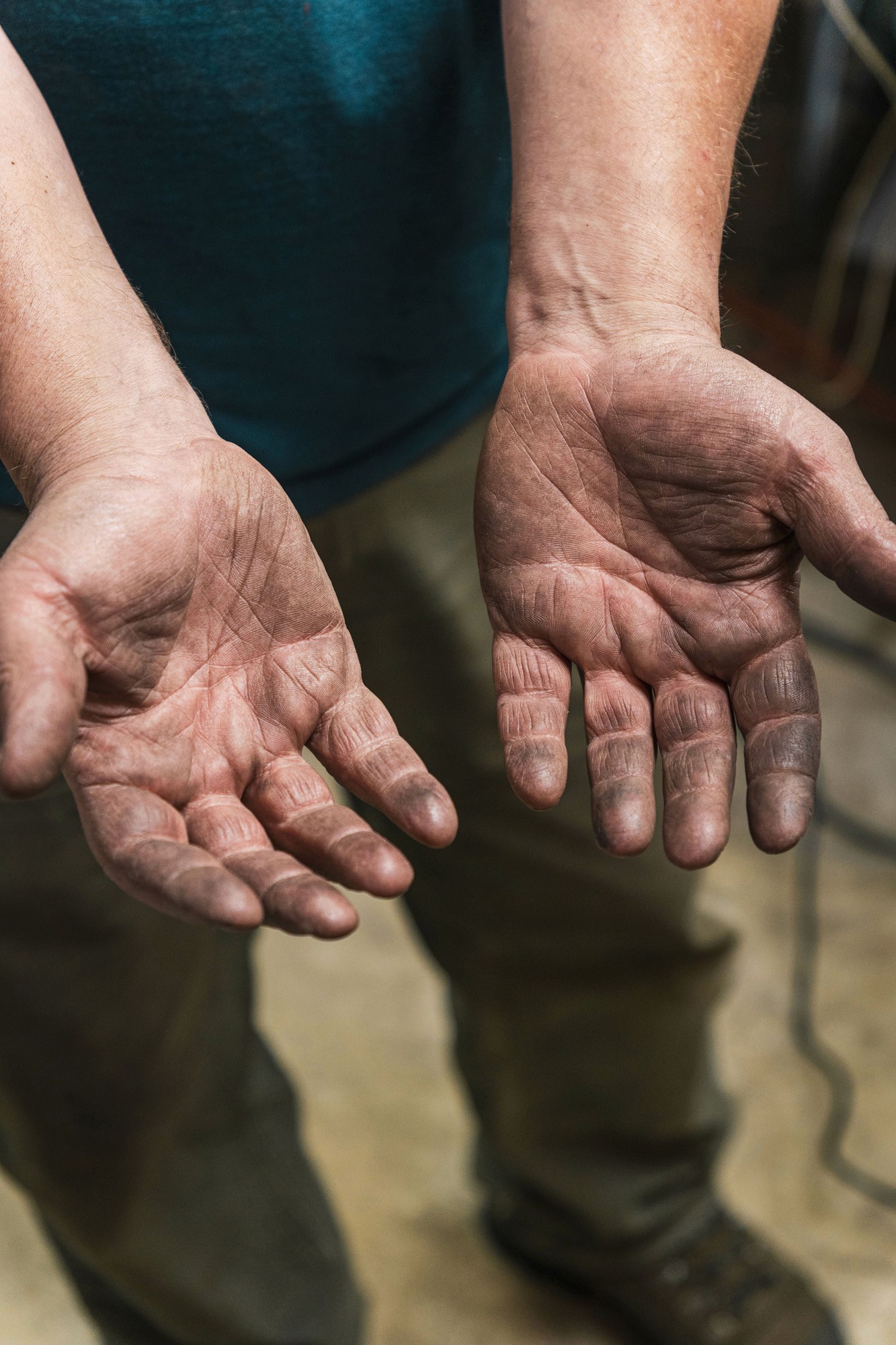
Burnishing the button pulls
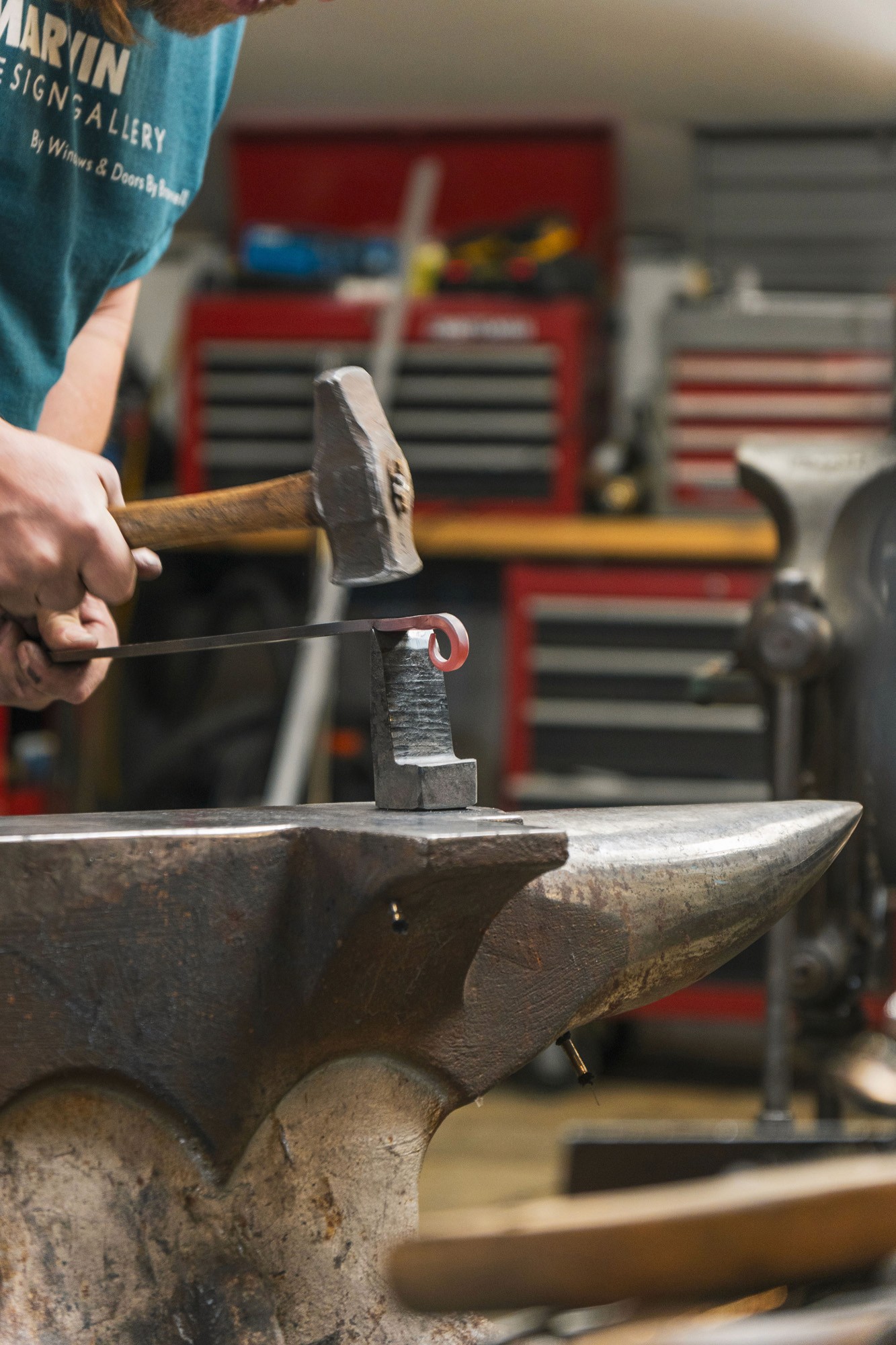
Hot cutting with an anvil tool and hammer
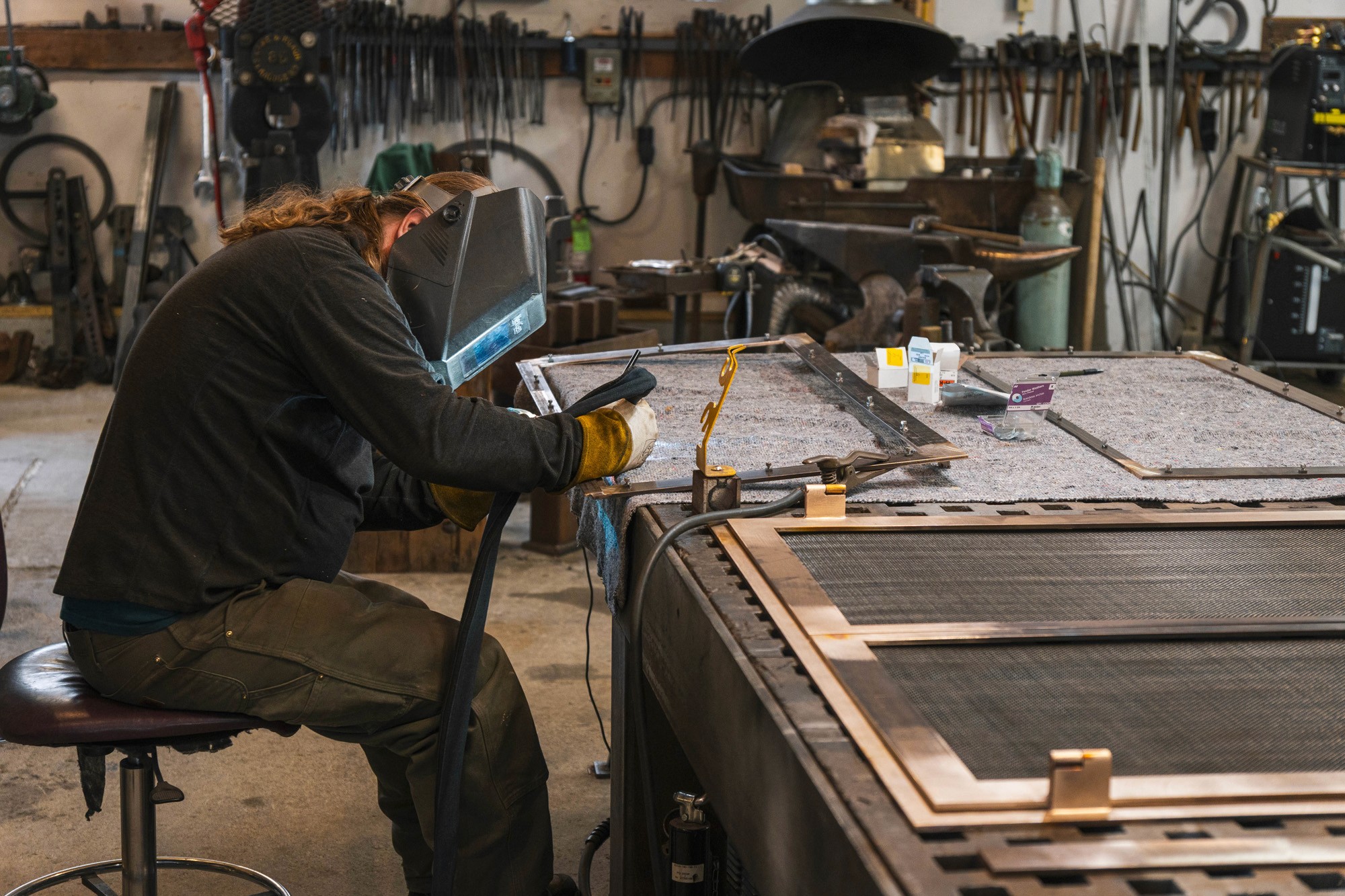
Tig welding hidden fixtures
What makes working with metal so special?
I love forge work in particular. It’s such a historic process. We've been doing it for thousands and thousands of years. Forging is also a transformative process. It’s not additive or reductive. You’re not losing or gaining any mass. The material starts as one shape, and if you push it here and pull it there, you can discover another shape inside of it. Sometimes I use modeling clay to experiment with stretching and curling and twisting it to see what it can become. We call it “blacksmith tai chi.” I’ve spent 30 years with the medium and the material, and I still find it fascinating.
What kinds of projects would you like to do more of?
I would love to do more contemporary forge work. There’s a handful of artists out there who are doing creative, functional art pieces. They're playing with shapes and textures of things like fireplace tools or candelabras or railings. They're unique and express individual creativity but still do the job of storing a stack of logs or keeping people from falling off the balcony. I'm a very visual person. When I close my eyes, I can see an interesting shape, and I would love to have the time to actuate that vision into physical form.
Teaching is also very important to me. In the metalworking community, there's a huge emphasis on sharing the skills of the craft. Blacksmithing was almost lost in the 50s and 60s. The craft wasn't in demand or recognized in art schools. Auto mechanics weren't making their own parts anymore. Farmers were buying factory-made horseshoes. The last few people doing independent work realized they had to teach the next generation or there wouldn't be one. There were maybe 20 people who each thought they were the last blacksmith in America. By chance, a handful of them got together, started sending out newsletters, and having get-togethers. Those few people taught an entire new generation about blacksmithing and forge work when we were so close to losing it altogether. I'm on the board of a nonprofit educational organization where we host teaching sessions and classes for beginners.
Between teaching and sculpture, I could never be bored.
Words by Mallory StaubPhotography by Elias Gillen
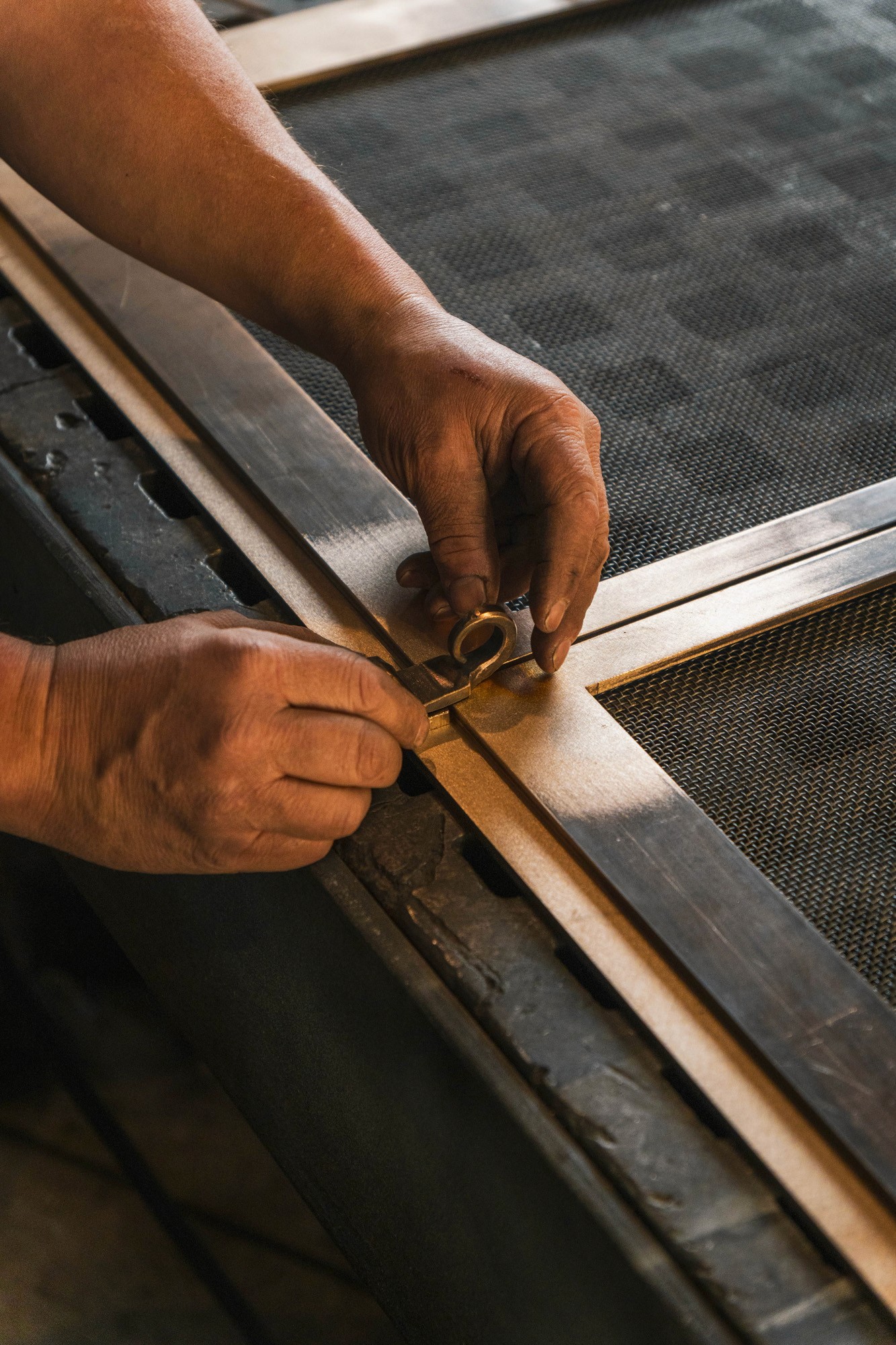
Test fitting
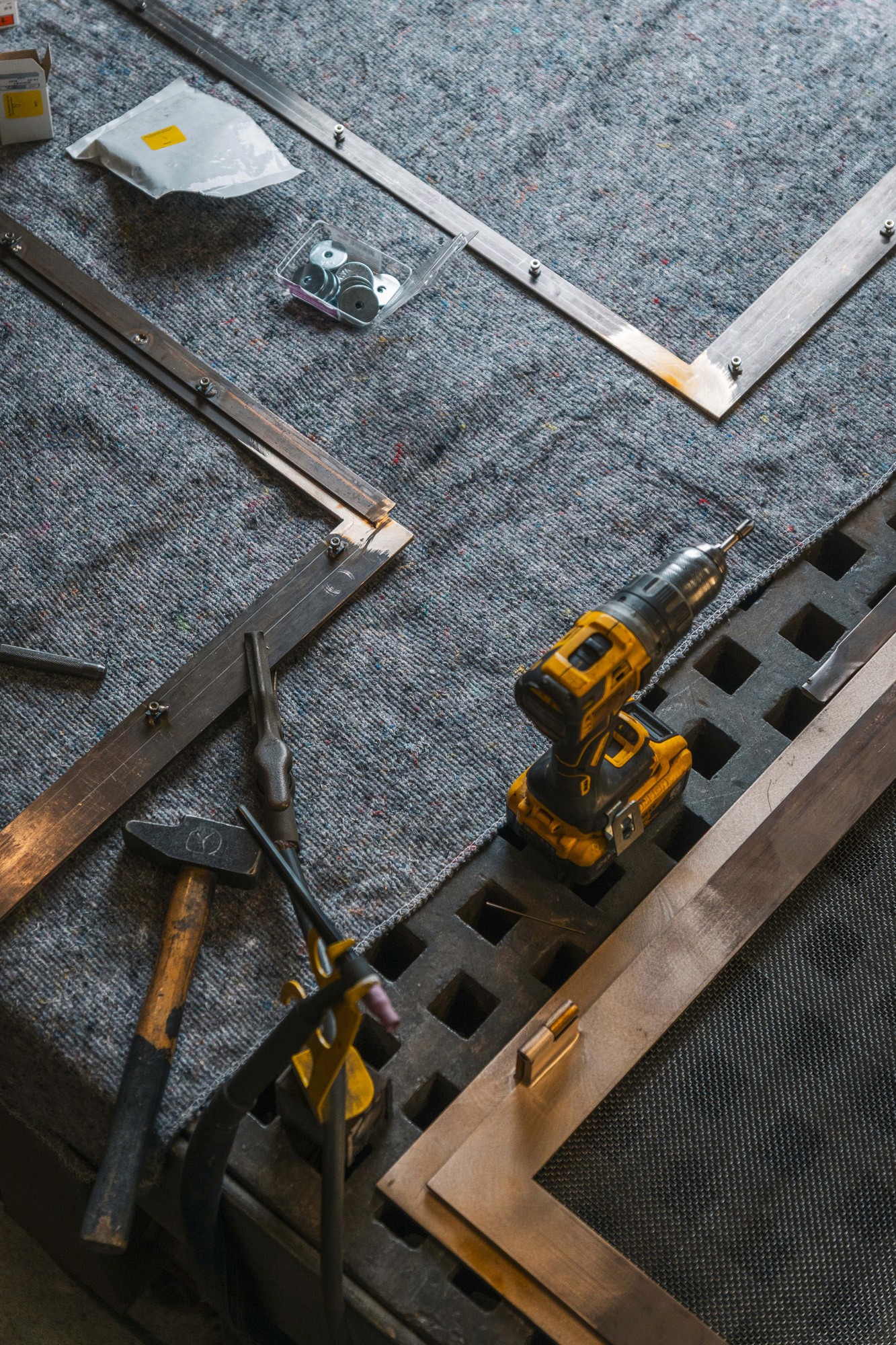
Assembly of glass fixtures
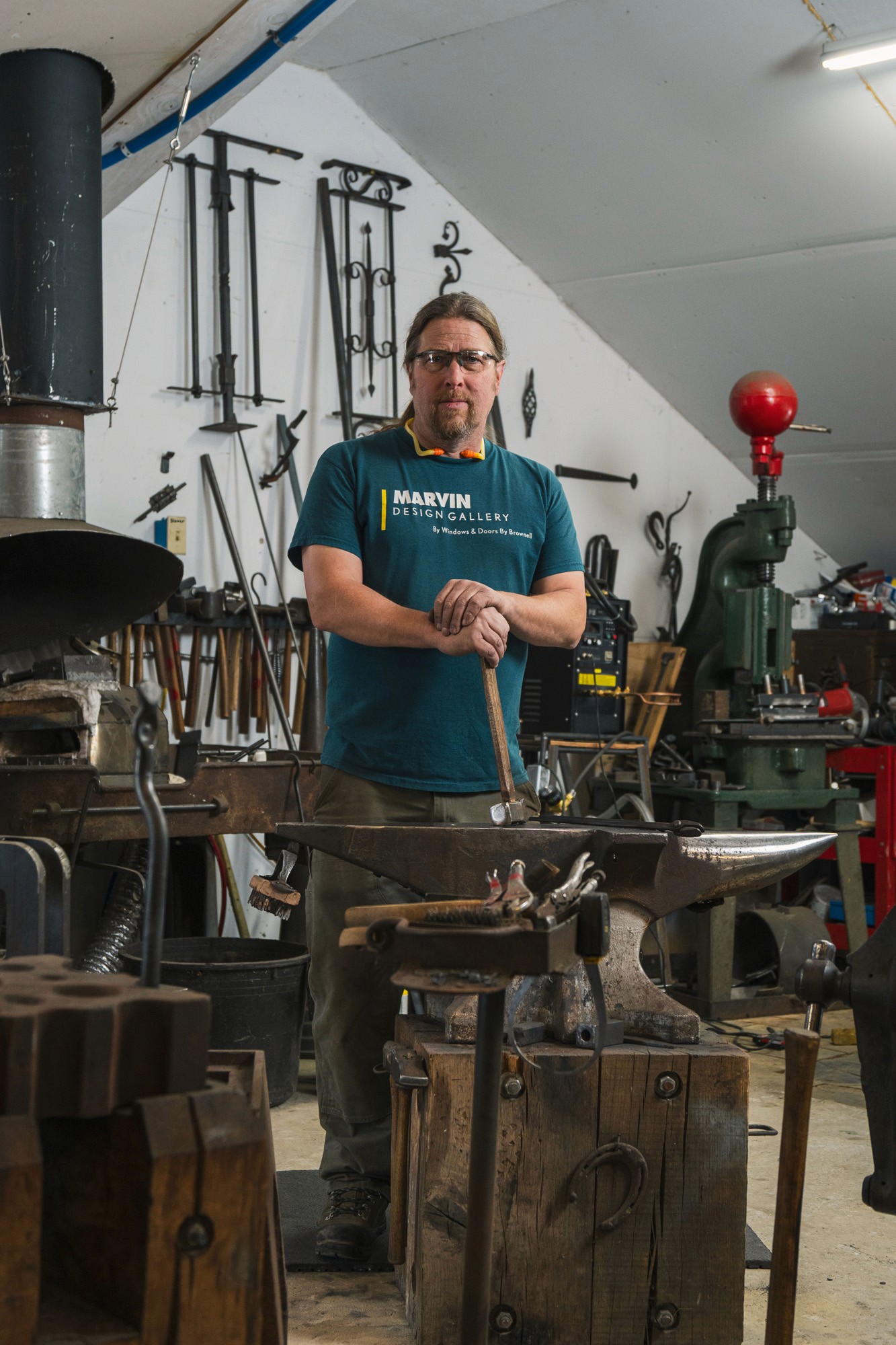
Metalsmith at the anvil